This unit has been extremely eye opening. Before this unit I had seen videos of slaughter houses and some processes of how our food is produced. However, when we watched Food Inc. my perspective of food changed. I had no idea of the different methods of producing food. To be completely honest, I did not know cows were fed anything besides grass. Learning about how cows' consumption of corn can affect us so greatly was very surprising. When I used to go out to eat and see "grass-fed beef" as a description in the burger section of a menu, I used to wonder why that detail was included. Yesterday, I went out to eat and saw that same specific detail. Although, this time I had a new understanding of what it meant.
Food is a very uniting thing. Over this break some of my family has been over to my house, including my cousin and his wife who is a registered dietitian. They are very healthy individuals; but, they do allow themselves to be a little extravagant every once in a while. I've always wondered why they put so much effort into purchasing the right foods, checking nutrition labels, and cutting certain foods out of their diet. After this unit, I now understand why they take such measures. They're very healthy eaters and are aware of the consequences of eating the right and wrong things. My parents are always trying to stray me away from fast food and introduce me to new "deliciousness" such as vegetables, soups, salads, and much more. Their advice to eat better used to go in one ear and out the other but now I understand why they try to get me to make better food choices.
My dad has a garden full of fresh herbs, vegetables, and sometimes I grow some fruit here and there. He tried to get me involved in helping him garden when I was very young but as I grew older I slowly deviated from that practice. I never truly understood what the point of growing your own food was besides the fact it saves some money here and there. Now, I see that it has many more perks besides decreasing the amount of spending one does. It results in freshness and having the control over what you are eating. Plus, it can unite people (like my dad and I) if individuals grow food together! I love food and although I can't promise I'm going to completely eat healthy after this unit, I definitely have a new awareness of what I consume that I didn't have before.
Thursday, March 31, 2016

A New Mindset Going Forward
From the first day that we started this food unit, I have learned something new everyday. My eyes have been opened to the glaring food issues in this country. The monopoly of huge corporations like Monsanto is only the start of the issues involving food in America.The healthiness and proper production of food has become second to the amount of money or profit that can be made. I've learned that many of the things that I would eat almost everyday is in fact not healthy at all, and contains biochemical products and other harmful things. This unit has definitely raised my consciousness of they way our food is produced in this country. Also, I have learned ways to still have access to healthy food, like gardening. To influence the food industry today i would propose that we build more community gardens in those areas that are considered food deserts.
Wednesday, March 30, 2016
Writing process
My process to write this research essay started off with me asking myself what's something I have a lack of understanding towards that relates to the subject. I've always been told about processed foods and how it negatively affects our health but never the environment. So I figured if it takes a toll on us, it probably has the same impact toward our earth. So I searched up my question and found some articles that have informed me exactly what happens to our earth through this industrial agriculture. I saved some of these articles that I felt would benefit my research essay and then started making my first drafts. I cited some of the drafts for textual evidence and then analyzed what I had cited.
Tuesday, March 29, 2016
My Writing Process
My writing process for my food politics research paper has been a tough one. To begin with, I had trouble thinking of a topic and it took some time before I actually found something I liked and wanted to stick with. After I found my topic the research process was a little bit easier. I enjoyed finding reliable articles and writing short summaries of them for my annotated bibliography. When reading the articles I found that they were filled with lots of information about the topic. Some of the information was exactly what I was looking for, but I also found a lot of stuff I did not know, that would be great to include in my research paper. While reading several articles, I became aware of a lot of issues in our food system. For example, I learned that meat (along with many other foods) is so processed that it loses all of its flavor and has to be injected with chemicals that make it taste like meat again. That is only one of the many new things I learned while researching about my topic. Honestly this whole chapter on foods has been interesting and I enjoy writing about it in my research paper.
Saturday, March 26, 2016
Broccoli Kale Salad for Dinner, and Food Policy Changes on the Menu for Tomorrow
When it comes to responsible eating, I consider myself to be pretty darn lucky. My mom is one of those slightly obsessive health moms who is constantly reading articles on food, warning everyone that Red 40 causes cancer, and shopping at Sprouts. Mealtime in the Douglass household is quite different than many households. We pour organic, non-GMO Silk Almond Milk over our Grape Nuts, spread sugar free organic peanut butter on our sprouted bread, and have broccoli kale salad for dinner. (Maybe I'm slightly exaggerating... but not much. My mom regularly feeds us all those things). Sometimes the healthy eating gets old, but most of the time I'm grateful for my mom's wisdom. This ERW unit has taught me why my mom chooses to eat carefully. Now that I see the harmful effects that the food industry has on the health of ourselves, animals, and the planet, I am so grateful that I have been taught to eat right.
It still can be so hard to eat healthily. There are seven people in my family, and we can't always invest time and money into cooking and eating right. Life happens. It's sometimes just cheaper and easier to pick up a Costco pizza for dinner, even though we know that the environmental and human health costs of consuming it are high. Also, it is hard to be motivated to eat healthy foods when salty, deep-fried and sugary goodness can be located instantly just by telling Siri that you're hungry. What really needs to happen is changes in the food industry. If healthy food was cheaper, it would be easier for consumers to make smarter decisions. I like Mark Bittman's idea of taxing unhealthy foods, as this would be a step in the right direction in making healthy food available to all; however, several other changes, such as greater regulatory power for the FDA, changes to nutritional facts labels, and banning harmful food additives such as trans fat and artificial dyes, will have to be made if we have any intention of saving our planet.
Overall, this ERW unit has changed my attitude towards healthy, responsible eating. I realize now that consumers have power over the food industry. If all consumers stopped buying nonorganic or unhealthy products, the food industry would stop making them. If consumers demand organic or non-GMO products (as they are beginning to do), the food industry will provide them. As an ERW class, we are no longer ignorant of weaknesses in food policy. We cannot spend our time complaining about the food system and then hypocritically support the same food system we despise by continuing to purchase their products. As Ghandi said, we've got to "be the change [we] wish to see in the world."
Policy wise, I have tons of ideas for how our food industry can be better. We can follow the examples of other developed countries and ban harmful additives such as trans fat and artificial dyes. We can improve nutritional facts labels to make product information more accessible to consumers. There are a plethora of other ideas out there that I've come across as I've worked on my research paper. Real changes can only be made, however, when consumers demand them.
What do you guys think? Has this food unit motivated you to change your diet, even if only in small ways? And what more can be done to change our food system?
Wednesday, March 23, 2016
What Can We Do To Change Our Food System?
We can stop drinking sodas and other sweetened beverages.
You can lose 25 lbs in a year by replacing one 20 oz soda a day with a no-calorie beverage.We can eat at home instead of eating out.
Children consume almost twice as many calories when eating food prepared outside the home.
Tell schools to stop selling sodas, junk food, and sports drinks.
Over the last two decades, rates of obesity have tripled in children and adolescents aged 6 to 19 years. Don't eat meat as often because that's one of the reasons there's obesity.
We should buy organic or sustainable food with little or no pesticides.
According to the EPA, over 1 billion pounds of pesticides are used each year in the U.S.There should be a demand in job protections for farm workers and food processors, ensuring fair wages and other protections.
Poverty among farm workers is more than twice that of all wage and salary employees. I believe that if we begin to make our own healthy food or moreover our healthy meal plans, it will lead to a healthier life-style for everyone.
Tuesday, March 22, 2016
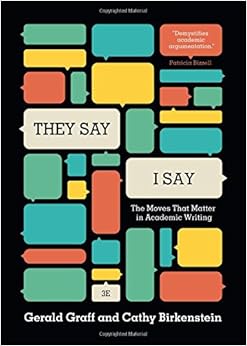
They Say/I Say Templates
You may want to look at these helpful templates when trying to figure out how to integrate the words of others into your paper.

Subscribe to:
Posts (Atom)